Research & Innovation

  • Home
  • <
  • Research & Innovation

RESEARCH & INNOVATION

Research That Powers Our Products

Indoor and outdoor localisation

Working out where people and assets are when GPS is weak or unavailable, using WiFi signals and sensor networks.

Wireless sensor networks

Planning sensor layouts, radio links, clustering and routing so a network covers its area and lasts longer on battery.

Computer vision

Understanding rooms and scenes from ordinary photos: finding surfaces, depth and perspective.

about1
Peer-reviewed · Array (Elsevier), 2026

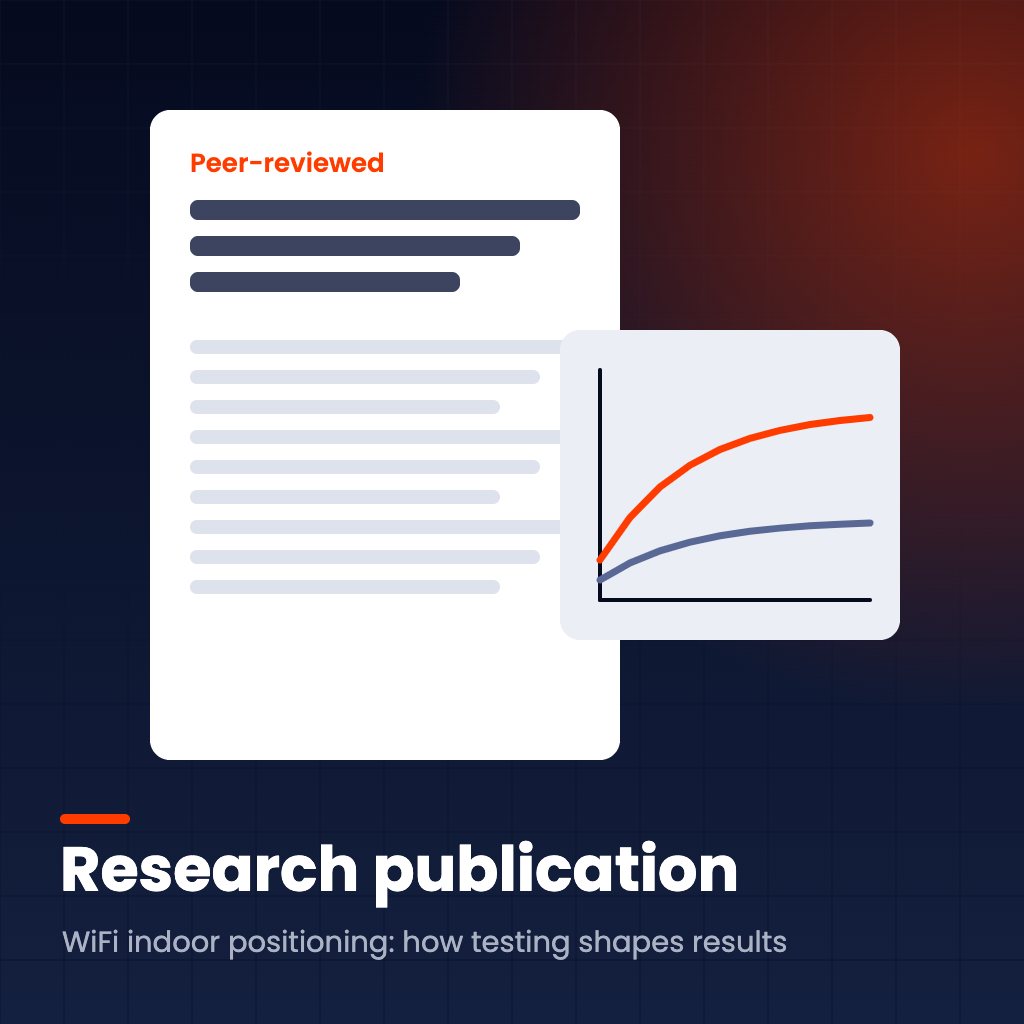
How Testing Shapes WiFi Positioning Results

“Systematic effects of evaluation protocols in WiFi fingerprint localisation: Uncertainty and dependence on survey geometry.” Rupendra Hada (IIT Indore) and Hemendra Singh Hada (Digitrix Software LLP). WiFi fingerprinting estimates where a device is from the signal strengths it sees. The paper shows that the way these systems are usually tested changes the accuracy they report: when survey data are split at random, the test reuses points already seen in training, so it measures re-identification rather than true localisation. It quantifies this effect, shows how it depends on survey spacing, and releases the evaluation code.


  • icon
http://Status%20icon

DOI

10.1016/j.array.2026.101407

KEY FINDINGS

Random splits flatter results

Randomly splitting survey points puts test points beside training points, so reported errors measure re-identification, not localisation.

Survey geometry matters

How optimistic the reported error is depends on survey geometry, especially the spacing between survey points.

Open, reproducible evaluation

The evaluation code is released so others can reproduce the results and test their own systems fairly.

about1
Forest protection · In development

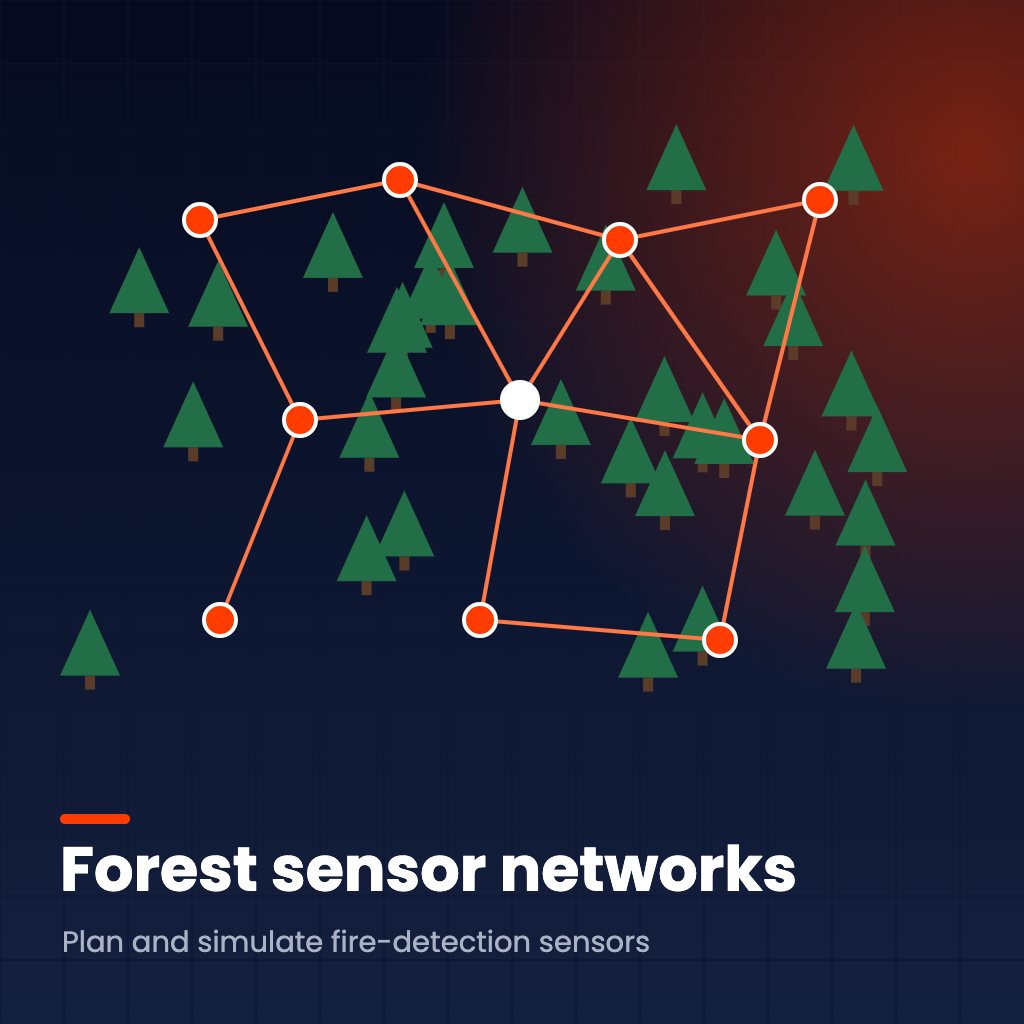
Forest Fire Sensor-Network Planner

A planning and simulation platform for wireless sensor networks that detect forest fires. Before any hardware goes into the field, planners can place sensor nodes on the forest area, simulate radio links and signal loss through terrain and vegetation, choose cluster heads and data routes, and estimate how long batteries will last. The network models are based on published sensor-network research, and the platform is designed to work for any forest territory.

  • icon
http://Status%20icon

Status

In development · Confidential

HOW IT WORKS

1. Plan

Place sensor nodes and base stations on a map of the forest area, taking terrain and vegetation into account.

2. Simulate

Model radio links, signal loss, cluster-head selection and the routes data takes back to the base station.

3. Evaluate

Compare layouts on coverage, connectivity and expected battery life before buying any hardware.

THE INNOVATION BEHIND OUR PRODUCTS

How the AI in Our Products Works

RoomCanvas: room understanding from one photo

Segmentation models find the floor and wall surfaces in a single photo, and depth and room-layout estimation recover the perspective, so tiles, paint and wallpaper are laid with correct geometry. A separate 3D path renders the room for a 360° view.

Van Sanchalan: AI for forest produce

A log-end detector designed to run offline on a mid-range phone counts logs and estimates diameters as a cross-check of the official tape. Handwritten register pages are digitised with field-level checks, and planned, felled, transported and received quantities reconcile automatically.

AdvaitaR: citations traced to the page

Retrieval over a large library of indexed research passages links every drafted statement to its exact source page. Cooperating AI agents handle search, drafting, citation checking and style, and a stylometry module keeps drafts in the author’s own voice.

Voice assistant: edge device, cloud intelligence

A small ESP32-S3 device at the counter handles listening and playback, while speech understanding and answers run in the cloud, in English and Gujarati, grounded only in the dealer’s own service information.

Garuda: from resumes to ranked shortlists

Resume parsing turns many formats into structured candidate profiles; matching scores each profile against the job requirements and highlights the skills that are missing.

AI phone interviews: structured conversations

Scheduled AI voice calls follow an interview flow the recruiter designs, adapt follow-up questions to the answers, and produce a structured summary for each candidate.

Interested in collaborating on research or a pilot?

OUR LATEST BLOG

Latest From Our Blog

Team working together on laptops in an office

20 June 2024 No Comments

Balancing AI Innovation with Ethical Standards

1. Introduction Artificial Intelligence is rewriting the rulebook for innovation—from healthcare breakthroughs to smarter infrastructure. Yet as AI

Icon

Elevating Customer Experience.